
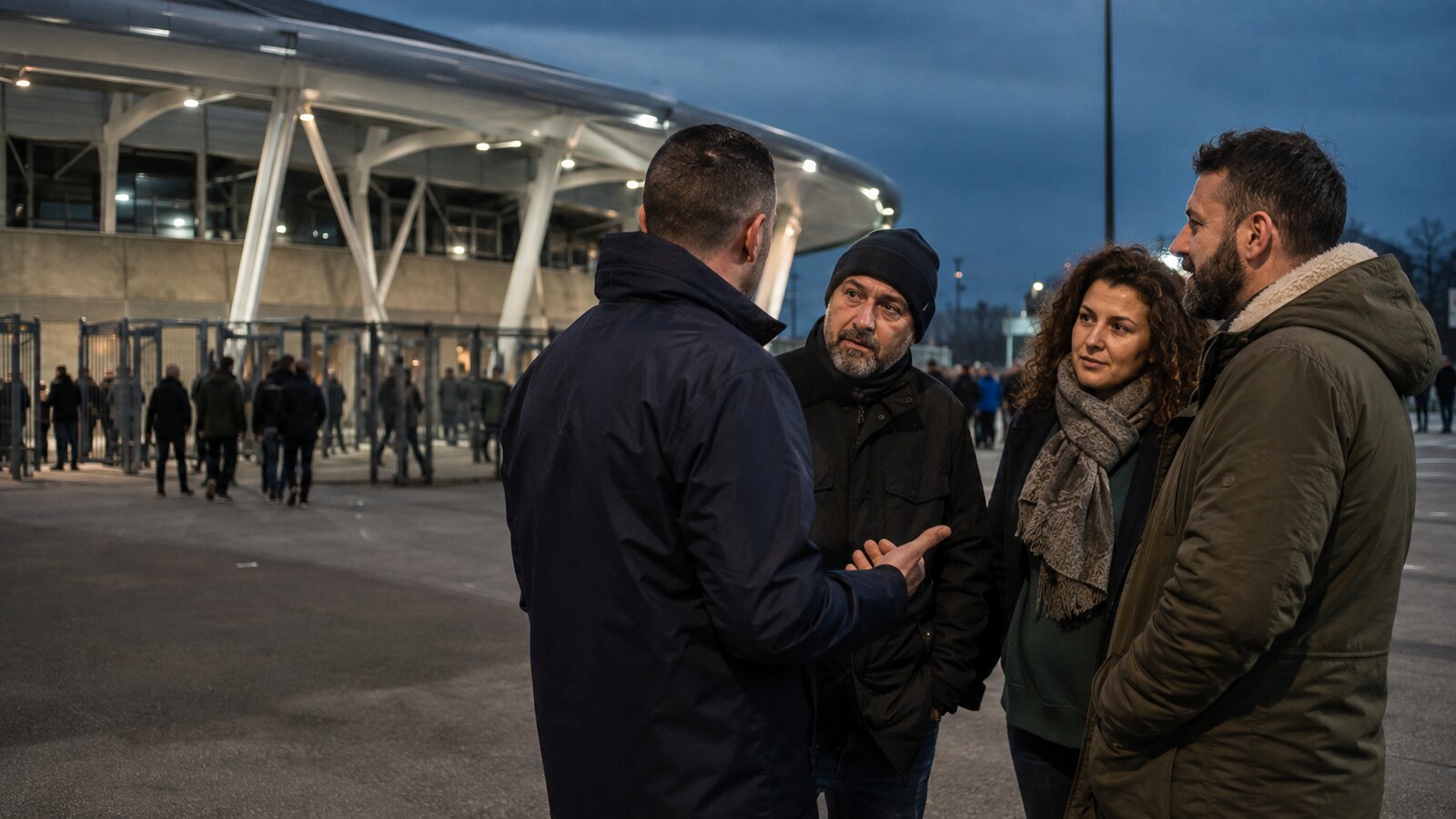
When away tickets are too expensive, stadium entry is poorly organised, or club decisions are made without speaking to supporters, who can a supporter turn to? One of the key points of contact should be the Supporter Liaison Officer — the SLO. The SLO’s job is not to speak on behalf of the stand, but to help ensure that communication between supporters and the club is regular, direct and serious.
What is an SLO and what does the role actually involve?
A Supporter Liaison Officer (SLO) is a person appointed by a club as a key contact point for supporters. The role works in both directions: the SLO provides supporters with relevant information from the club and brings supporters’ needs, questions and concerns back to the club.
An SLO is not a police officer, security guard or elected representative of the stand. The SLO does not lead supporters or speak in their name; the role is to facilitate dialogue and cooperate with club management, ticketing and match-operations staff, security personnel, transport providers and SLOs from other clubs.
When did the SLO become a UEFA standard?
UEFA introduced the requirement to appoint an SLO in Article 35 of its 2010 Club Licensing and Financial Fair Play Regulations. According to UEFA’s 2011 handbook, clubs were expected to meet this requirement before the start of the 2012/13 season. It is therefore more precise to describe it as a UEFA licensing criterion for club licence applicants rather than a rule that automatically applied to every European club from 2010.
In the UEFA Club Licensing and Financial Sustainability Regulations 2026, the requirement appears in Article 45. A licence applicant must appoint an SLO as a key contact point for supporters, and the SLO must regularly meet and cooperate with relevant club staff.
What can an SLO do for a supporter?
An SLO cannot solve every problem, but the role should provide supporters with a clear and legitimate channel to the club. In practice, this can include:
- providing verified information about tickets, stadium entry, travel and rules for away supporters;
- collecting supporters’ questions, complaints and proposals and passing them to the responsible people at the club;
- directing a supporter to the relevant club department and following up on communication;
- cooperating with the opposing club’s SLO before a match and drawing the club’s attention to how its decisions affect supporters and the matchday experience.
What is an SLO not, and what can the role not do?
The SLO facilitates communication, but is not an independent ombudsman, a supporters’ lawyer or a body with final decision-making authority. Football Supporters Europe specifically stresses that an SLO is not a representative of supporter groups and cannot replace their independent organisation.
- an SLO is not a police officer, security guard or leader of a supporter group;
- an SLO cannot independently overturn a stadium ban, change ticket prices or reverse a decision by the police, a football association or the club;
- an SLO does not have to agree with every supporter request, but should communicate it fairly to the relevant people;
- the role does not replace supporter associations, club members or other forms of organised supporter activity;
- the SLO must not exist only as a name on a licensing document without genuine contact with supporters.
How can you recognise a functioning SLO?
Simply appointing someone is not enough. UEFA’s standard requires regular contact with supporters and cooperation with relevant club staff. A functioning SLO should be visible, accessible and credible to both sides.
- their name and contact details are easy to find on the club’s official channels;
- they are present among supporters and understand the culture of different groups in the stand;
- they publish verified information in good time before home and away matches;
- they speak regularly with management and other relevant club departments;
- they explain to supporters what has happened with a question or proposal;
- they cooperate with SLOs from other clubs to improve away-match organisation.
Why is the SLO important for supporters’ rights?
The existence of an SLO does not in itself give supporters voting rights in club ownership or governance. It does, however, create an official point of contact through which issues involving tickets, safety, away travel, stadium access and other decisions can be raised directly with the club.
A good SLO will not eliminate conflict between a club and its supporters, but can help prevent decisions from being communicated too late, without explanation or without understanding their consequences. It is a basic step towards a relationship in which supporters are treated as permanent participants in the football community rather than merely ticket buyers.
What can a supporter do today?
- On your club’s official website, search for “SLO”, “Supporter Liaison Officer” or “supporter contact”.
- If no contact is published, send the club a short written question asking who performs the SLO role and how supporters can contact that person.
- Describe the problem specifically — state the match, date, what happened and what response or solution you are seeking.
- Keep the correspondence and ask who the issue was forwarded to and when you can expect a response.
- If the club has no functioning channel, contact the body responsible for club licensing at the national association or ask Football Supporters Europe for guidance.
Verified sources
Sources last checked: 24 August 2026.
- UEFA Supporter Liaison Officer Handbook — 2011 edition.
- UEFA Practical Guide to Supporter Liaison — 2021 edition.
- UEFA Club Licensing and Financial Sustainability Regulations 2026 — Article 45.
- Football Supporters Europe — Supporter Liaison Officer.
A question for your club
Do you know who performs the SLO role at your club and where their contact details are published?
If you cannot find that information on the club’s official channels, send a written request. The fact that someone has been formally appointed is not enough — supporters must know who the contact person is, how to reach them and how they will receive a response.
Scope note: This article explains the SLO role according to UEFA rules and Football Supporters Europe materials. National associations may impose additional or more detailed requirements. The article is educational and does not constitute legal advice.