
One seat in the stadium. The same match. The same view of the pitch. Yet the ticket can cost a completely different amount depending on when you buy it and how many other people are trying to do the same.
That is the basic idea behind dynamic pricing — a system in which prices change in real time according to demand. Football Supporters Europe (FSE) argues that in football this is not merely expensive; it is fundamentally unfair to supporters.
How does dynamic pricing work?
With traditional ticketing, a club or organiser sets the price in advance. Under dynamic pricing, an algorithm can raise or lower the price according to demand, remaining inventory, the timing of a purchase or other criteria used by the seller.
This model already exists in aviation, hotels and other sectors. According to FSE, the problem begins when the same logic is applied to football.
Why is football not an ordinary market?
A supporter does not have a genuine substitute for their club. If they want to attend a particular match, they cannot simply choose another seller offering the same event at a lower price. There is one match, one kick-off time and usually one official seller.
High demand therefore does not mean the product has improved. The seat is the same and the match is the same — only the price has risen because many people want to attend.
FSE argues that dynamic pricing can turn supporter loyalty into a mechanism for extracting the maximum possible price: the more important the match and the more committed the supporter, the greater the opportunity to charge more.
Why does the World Cup matter?
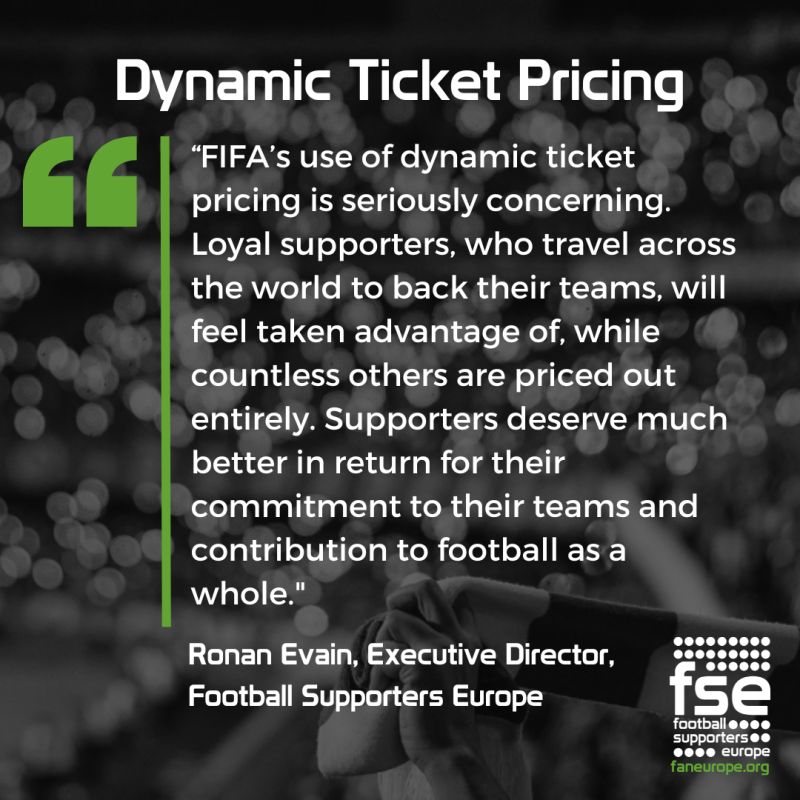
The debate became particularly urgent because FIFA used what it described as “variable pricing” for tickets to the 2026 World Cup. FSE and consumer organisations have argued that where demand is enormous and supporters have no alternative, buyers have almost no bargaining power.
The secondary market is another concern. FSE also supports a ban on ticket resale above face value, arguing that match tickets should not become speculative assets.
What is FSE asking for?
FSE, together with Euroconsumers, Live DMA and other partners, is calling on the European Commission to ban dynamic ticket pricing for live entertainment through the forthcoming Digital Fairness Act.
The demand is not that every seat must cost the same. Different stands, seat categories or pre-defined price bands can legitimately have different prices. The key distinction is that supporters should know the price in advance and should not see it rise simply because demand surges while they are trying to buy.
What could this mean for supporters in the Balkans?
Dynamic pricing is not yet the standard ticketing model at most stadiums in our region, but the digitalisation of ticket sales makes such systems increasingly easy to introduce.
That is why the debate should happen before the practice becomes normal. Clubs have a legitimate interest in increasing revenue, but supporters should know the price in advance, understand how it was set and be protected from systems that treat loyalty as unlimited willingness to pay.
COLORS view
Digital ticketing can make stadium access safer and more efficient. But technology is not inherently fair or unfair — the rules governing its use are what matter.
A simple principle is a good starting point: the price of a ticket should be clear before a supporter joins the queue to buy it. If two supporters can pay dramatically different amounts for the same seat simply because an algorithm estimates what each is willing to pay, transparency has been seriously weakened.
Source: Football Supporters Europe, “Why FSE is calling for a ban on dynamic pricing in live entertainment including football”, 23 July 2026.
Photo/visual: Football Supporters Europe (FSE).